
The origins of BJJ
Club lineage
Sub Club Grappling is proud to be part of the UK Bitetti Team. Our head instructor, Dan, is a 1st Degree Black Belt under Roberto Almeida, Head of the UK Bitetti Team.
In addition, Roberto earned his black belt from the legendary Amaury Bitetti.
This strong lineage connects us to some of the most respected names in Brazilian Jiu-Jitsu.
As a result, we take great pride in the legacy that shapes our training, teaching, and growth on the mats.
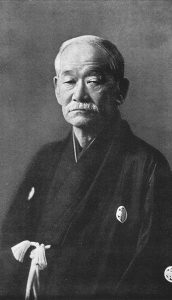
Kanō Jigorō
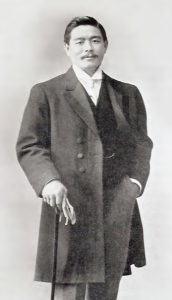
Mitsuyo Maeda
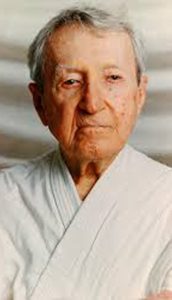
Carlos Gracie
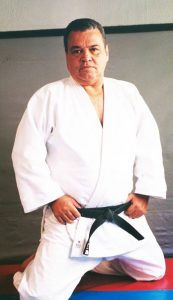
Carlson Gracie Senior
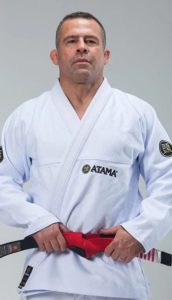
Amaury Bitetti
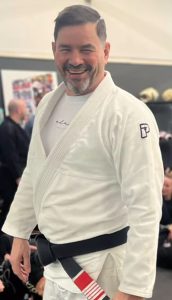
Roberto Almeida
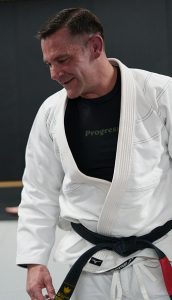
Dan Merritt
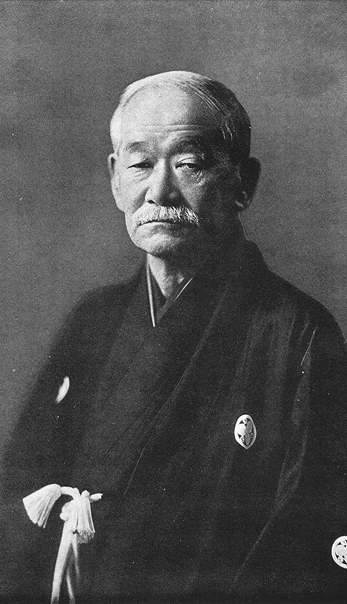
Kanō Jigorō
Kanō Jigorō (1860–1938) was a Japanese educator and martial artist who founded Judo, one of the first modern martial arts.
A visionary thinker, Kanō combined techniques and philosophies from traditional jujutsu schools with his own ideas.
As a result, he created a system that emphasized efficiency, discipline, and personal growth. He revolutionised martial arts training in Japan. In addition, he introduced Judo as a global sport, eventually making it an Olympic discipline.
Kanō’s influence extends far beyond Judo. In fact, he laid the groundwork for Brazilian Jiu-Jitsu and promoted respect, perseverance, and continuous self-improvement.
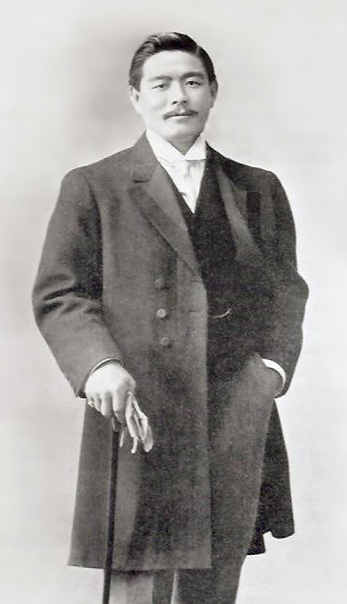
Mitsuyo Maeda
The Father of Brazilian Jiu-Jitsu, also known as Count Koma, was a pioneering Japanese Judoka. He was the key figure responsible for introducing Judo—and ultimately Brazilian Jiu-Jitsu (BJJ)—to Brazil in the early 20th century.
A student of Jigorō Kanō, Maeda was also a fierce competitor with more than 2,000 fights to his name.
In addition, he traveled the world demonstrating and teaching Judo.
In Brazil, he taught a young Carlos Gracie. As a result, the Gracie family adapted and evolved the art into Brazilian Jiu-Jitsu. Maeda’s legacy lives on today as the foundation of modern BJJ.
Mitsuyo Maeda’s Journey
1.
Born on November 18th 1878 in Funazawa village, Aomori prefecture, Japan.
2.
As a child, Maeda originally dabbled in sumo but, lacking the ideal build for the sport and hearing tales of a burgeoning art’s success in grappling matches throughout the country, soon switched to Judo instead.
3.
Moving to Tokyo to attend university, Maeda enrolled at Jigorō Kanō’s legendary Kodokan Institute. During his years at the heart of Judo, he became known as a prolific and relentless competitor.
In fact, his success was so great that Judo master Kyuzo Mifune regarded him as a leading promoter of the art. As a result, Maeda gained recognition for his consistent victories against practitioners of other grappling styles.
4.
After defeating 8 opponents in a row at one particular tournament, Maeda was awarded the rank of fourth-dan black belt (yondan).
5.
In 1904, the Japanese legation in Washington D.C. requested that the Kodokan send teachers to promote Judo in the United States. Maeda enthusiastically accepted the invitation. In addition, he joined several other instructors for the journey. They set sail from Yokohama harbour on November 16th.
6.
Arrived in New York City on December 8th 1904.
7.
Over the next few months, Maeda and his fellow teachers gave public demonstrations across the east coast. In fact, they visited prestigious venues such as Princeton University and the West Point military academy. During these demonstrations, Maeda often invited enthusiastic challengers from the audience. As expected, he invariably threw them with ease.
8.
Opened the first Judo club in New York in 1905. The membership consisted mainly of Japanese expatriates, alongside a lone American woman called Wilma Berger.
9.
On December 8th 1905, Maeda took on a local wrestler in a prizefight in Atlanta, Georgia. The contest was decided by the best of three falls (pins) – two with the combatants wearing jackets and one without. Maeda won the two rounds with jackets and lost the one without.
10.
Maeda continued travelling through the UK, France, and Spain, where he acquired the nickname “Count Koma.” In December 1908, he landed in Mexico City. Here, alongside his usual public demonstrations, he announced an open challenge. In fact, Maeda offered 100 pesos to anyone he couldn’t throw.
He even promised 500 pesos to anyone who could throw him. However, according to The Mexican Herald, nobody ever managed to claim his money.
11.
Arriving in Havana, Cuba in July 1910, Maeda was joined by three fellow Japanese Judoka alongside whom he would continue to wrestle all comers. Together the four men became known as “The four kings of Cuba,” and Maeda gradually worked his way south through the Americas until they reached Brazil.
12.
On January 16th 1916 in Belem, Maeda responded to a challenge from Australian Greco-Roman wrestling champion Nagif Assef, throwing him off the stage on which their bout was fought before submitting him with an armlock.
13.
In January 1917, a 14-year-old Carlos Gracie witnessed one of Maeda’s demonstrations in Belém. Awestruck by the effectiveness of Maeda’s grappling, he decided to learn Judo.
As a result, he was accepted by Maeda as a student.
At that time, the art was also known as “Kano-Ryu Ju-Jitsu.” Later, Carlos brought it to Rio de Janeiro, where it was rebranded as Gracie Jiu-Jitsu.
14.
In 1922, Maeda opened his first Brazilian Judo academy. Initially a 4x4m shed, over subsequent decades it expanded and moved through several different locations, always producing tough competitors with a strong focus on newaza (groundwork).
15.
Maeda died in Belem on November 28th 1941, having been awarded his 7th-dan black belt the previous day and having won over 2,000 prizefights over the course of his life.